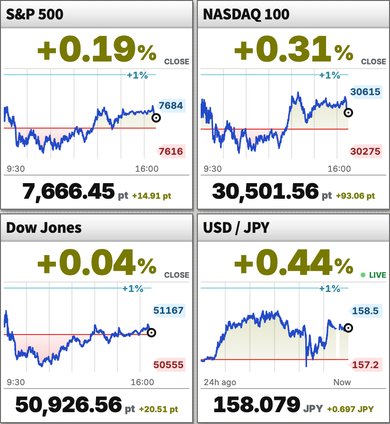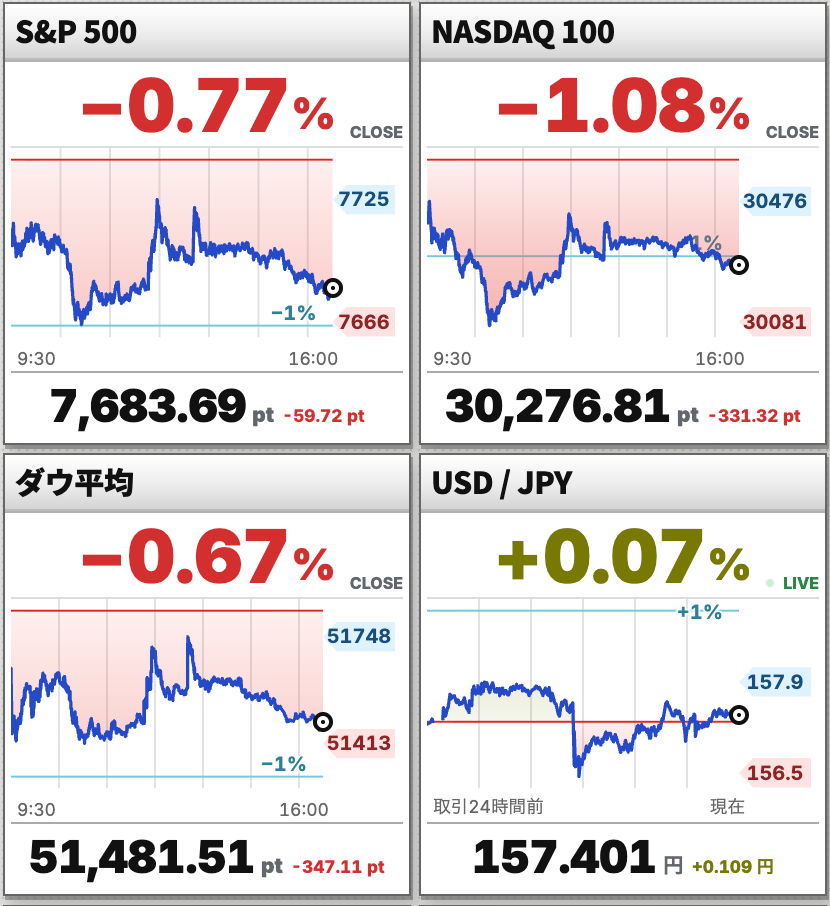
All three major U.S. indexes fell on September 28. The S&P 500 closed at 7,683.69, down 0.77% from Friday; the Nasdaq 100 fell 1.08% to 30,276.81; and the Dow lost 0.67% to 51,481.51. The Nasdaq 100, which has a heavier technology weighting, declined more than the other two indexes.
Higher oil prices and Treasury yields were in focus. Reuters reported that oil rose amid uncertainty over U.S.-Iran peace talks, while equities fell as yields remained elevated. The U.S. rejection of an Iranian proposal over the weekend was said to have renewed inflation concerns. No single factor fully explains the moves in each index.
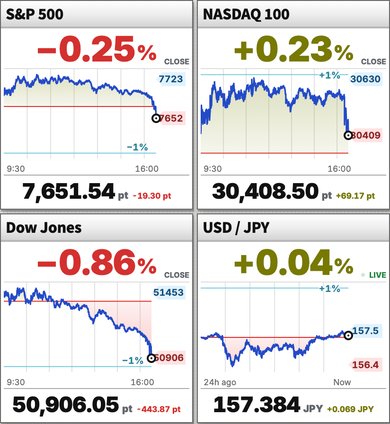
The charts on this site show all three indexes dropping sharply early in the session, then recovering part of their losses before weakening again late in the day. Reuters also noted that initial losses narrowed temporarily, but concerns about oil, yields and the Federal Reserve's policy outlook persisted. Investors were also looking ahead to U.S. employment data due later in the week.
A sharp morning decline and an unsuccessful midday recovery
At approximately 10:30–11 a.m. Eastern time, all three indexes deepen their losses. The S&P 500 moves toward a level about 1% below its previous close, while the Nasdaq 100 drops sharply in the same interval. A subsequent recovery includes another lift during the noon hour, but the indexes do not reclaim their previous-close lines. Momentum fades from the 1 p.m. hour, and selling returns during the 3 p.m. hour. Buyers respond to the lows without gaining enough strength to reverse the session's direction.
With oil and Treasury yields rising, the issue is not only future corporate profits but the price investors are willing to pay for them. Reduced optimism about a Middle East peace agreement and renewed energy-driven inflation concerns fit the morning pressure. Prospects for mediated talks also offered a reason for recovery attempts. I read the post-noon rebound as buying after a steep decline within that contest of positive and negative developments, rather than evidence that the underlying concern had been resolved. Fading peace hopes encouraging selling, and negotiation prospects supporting rebounds, fit the alternating recoveries and renewed declines on the charts.
Nasdaq 100 weakness reflects valuation pressure
The Nasdaq 100's larger loss is consistent with the greater rate sensitivity of earnings expected further into the future. This looks more like a reduction in the price paid for growth than an abrupt disappearance of AI demand. When the oil-to-inflation-to-interest-rate channel dominates, even a company with strong operations can experience a falling share price. Business prospects and the valuation multiple the market accepts are different variables.
The recovery never reached the previous close and did not prevent renewed afternoon selling. Its size from the low is therefore less informative than the resistance encountered after prices bounced. In the next session, an important test would be whether the Nasdaq 100 recovers faster than the other indexes if oil and rates stabilize. A lagging growth-stock recovery would suggest position reduction extending beyond an immediate response to headlines.
Major Index Closes
- S&P 5007,683.69 −0.77%
- Nasdaq 10030,276.81 −1.08%
- Dow Jones Industrial Average51,481.51 −0.67%