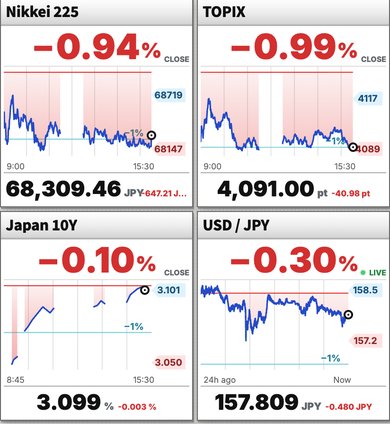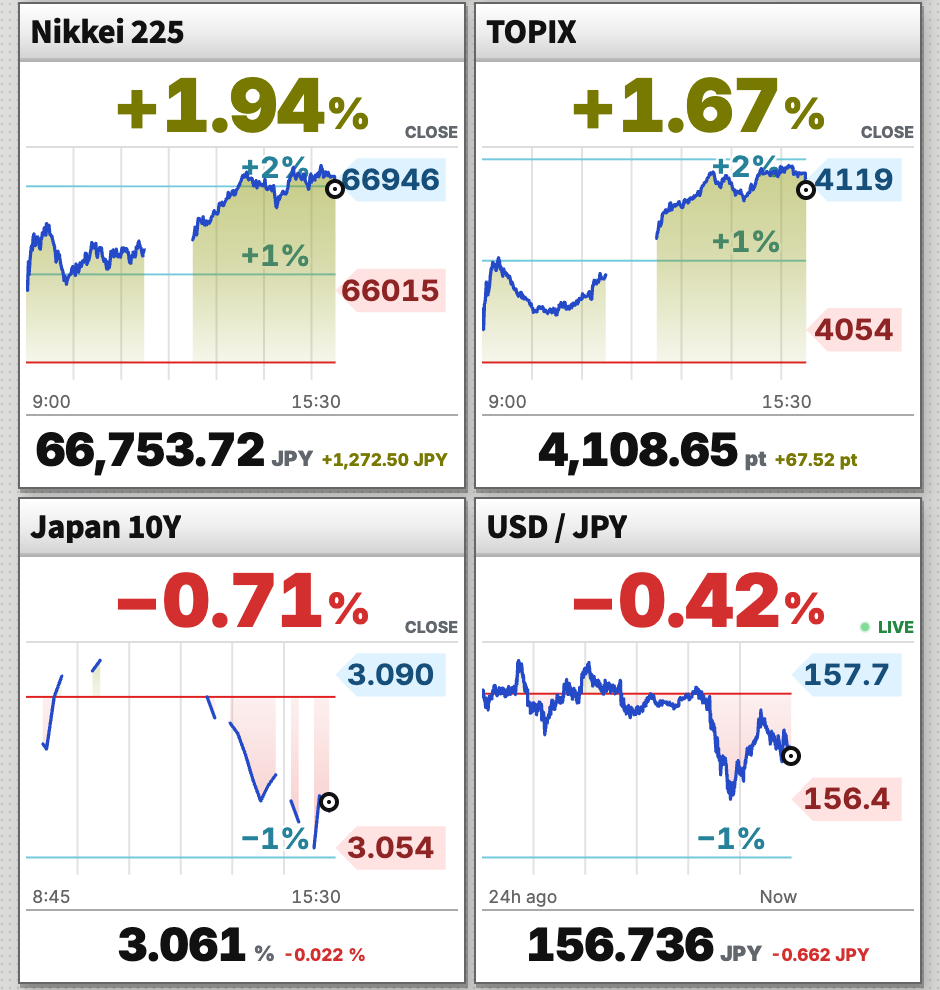
Tokyo stocks rebounded sharply on September 30. The Nikkei 225 closed at 66,753.72 yen, up 1,272.45 yen or 1.94% from the previous session. TOPIX gained 67.52 points, or 1.67%, to 4,108.65. The Nikkei recovered from the previous day's decline and extended its advance toward the close. Nikkei Indexes · Yahoo! Finance Japan
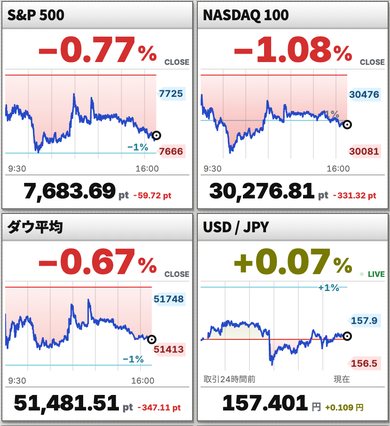
AI and semiconductor-related shares led the buying. Major U.S. stock indexes had fallen the previous session, but the Philadelphia Semiconductor Index rose, encouraging demand in Tokyo for SoftBank Group, Tokyo Electron and Advantest. Oil also fell after a major Saudi pipeline partly resumed operations, easing concerns about Middle East supply and inflation. Those two developments helped draw buyers back into Japanese equities in the morning. Kabutan/Fisco
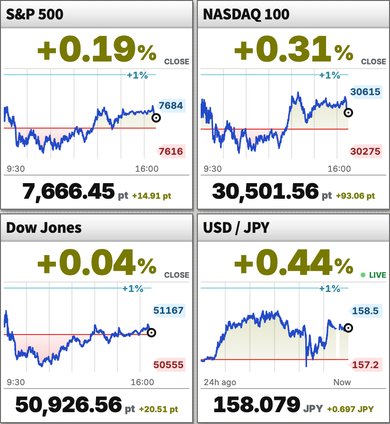
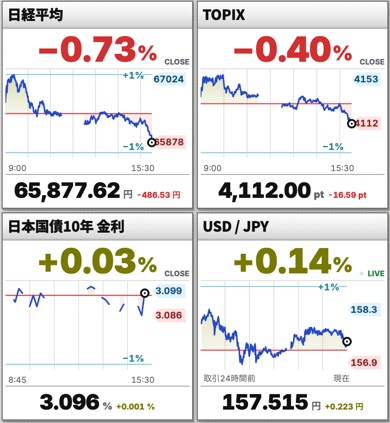
USD/JPY fell from 157.45 to 156.37 during the morning, a roughly 0.7% decline in the dollar against the yen. Market commentary pointed to dollar selling amid lower oil prices and month-end flows. A stronger yen can weigh on exporters, but chip-related buying prevailed: both the Nikkei and TOPIX held their gains. The day's main driver was renewed demand for semiconductor shares rather than the currency move. Kabutan/Fisco
A second afternoon advance broadens the rebound
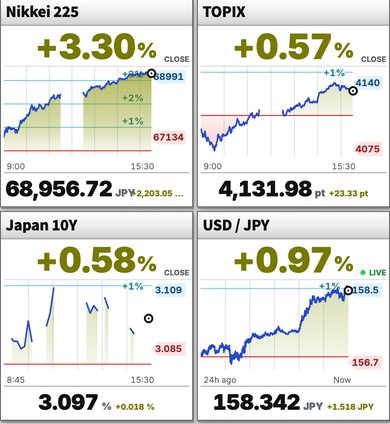
On the Japan-time charts, the Nikkei rises early, pulls back around 10 a.m. and then retains a morning range roughly 1% above its previous close. From about 12:30 to 1:30 p.m., another advance takes shape, followed by higher levels during the 2 p.m. hour. The TOPIX recovers its morning dip and also moves to a higher range near the afternoon reopening. Both retain much of the advance despite some late easing. Additional demand after the opening buying had subsided is the notable feature.
Semiconductor strength helps explain the Nikkei's rise, but the TOPIX's substantial rebound shows that participation was not confined to a few high-priced companies. Reduced concern about oil can improve the cost outlook for energy users and lessen anxiety about inflation-driven tightening. My reading is that AI-related growth expectations combined with broader renewed buying after the preceding decline and ex-dividend adjustment. The afternoon rise indicates continued evaluation of those supportive themes rather than a short-lived opening response.
A morning dollar decline does not contradict rising equities
The reported morning USD/JPY decline from 157.45 to 156.37 amounts to approximately 0.7%, and the rolling chart contains a sharp downward segment. Month-end flows and lower oil offered reasons for reduced dollar demand, yet Japanese stocks held elevated levels despite the firmer yen. Although yen appreciation can hurt exporters, semiconductor-demand expectations and the earnings implications of lower energy costs appear to have outweighed that currency headwind.
This distinguishes the session from a Japanese equity rally dependent on yen weakness. Index gains without that currency support point to independent equity-market catalysts. The TOPIX's further afternoon recovery also supports a broader rebound. The following session's useful test is whether both indexes recover from dips, rather than whether the Nikkei alone holds a high close. Sustained demand across industries is a better guide to the rally's durability than the size of one closing gain.
Major Index Closes
- Nikkei 22566,753.72 yen +1.94%
- TOPIX4,108.65 +1.67%