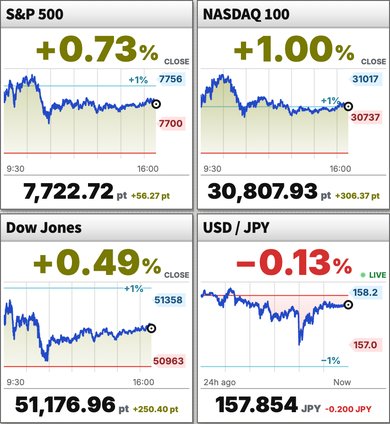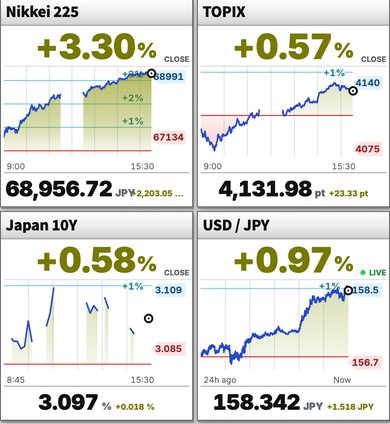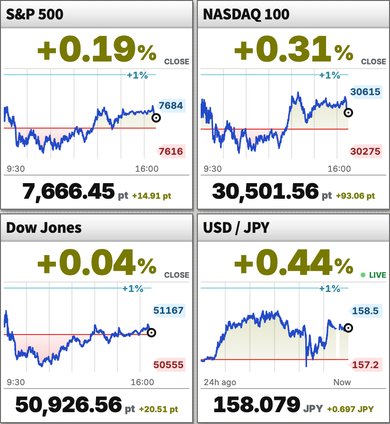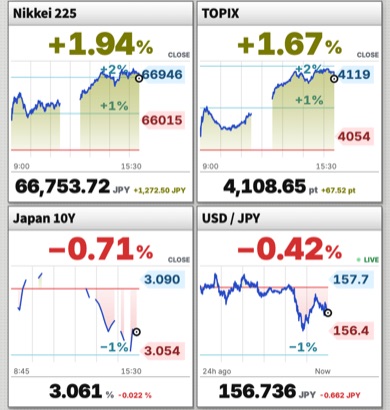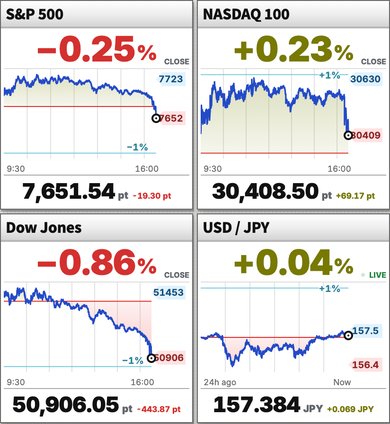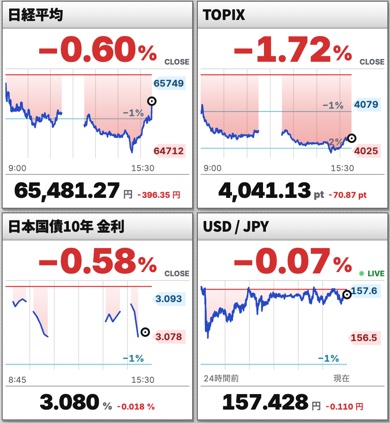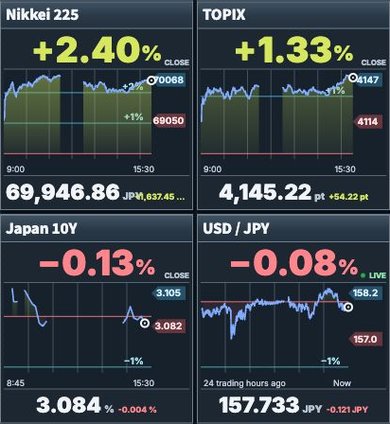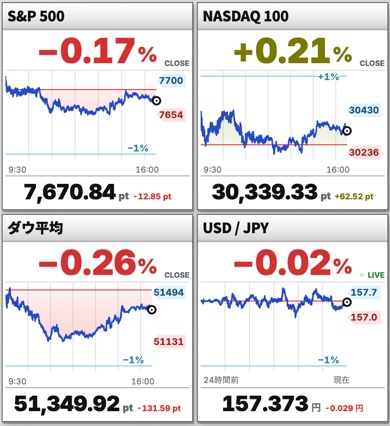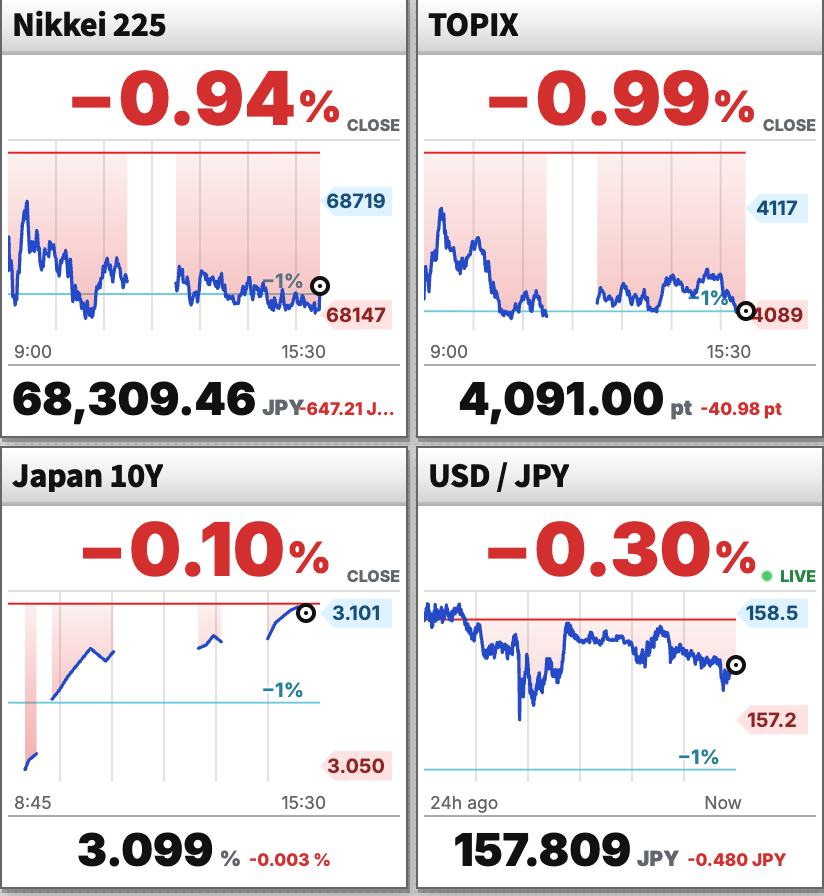
Japanese equities fell on October 2. The Nikkei 225 closed at 68,309.46, down 647.26 points or 0.94%, while TOPIX lost 40.98 points to 4,091.00, a decline of 0.99%. IwaiCosmo Securities reported selling to reduce positions ahead of U.S. employment data. After two sessions of sharp gains, the approaching weekend and a major economic release gave investors a reason to take profits rather than extend their exposure.
The charts show the morning rebound fading, followed by sideways trading near the lows in the afternoon. Tokyo Electron and SoftBank Group fell sharply, and selling spread to financial stocks including Mitsubishi UFJ. IwaiCosmo counted 1,306 decliners on the Prime Market, more than four-fifths of its stocks. Profit-taking reached well beyond the shares that dominate the Nikkei.
Some sectors still attracted buyers. Tighter U.S. restrictions on Chinese optical transceivers raised expectations for replacement demand, lifting Furukawa Electric, Sumitomo Electric and Fujikura sharply. Higher oil prices supported INPEX and ENEOS. Even as the indexes declined, investors favored companies with identifiable opportunities for stronger demand or higher selling prices.
The 24-hour USD/JPY chart shows a sharp overnight drop and recovery. FOREX.com reported that around 11:30 p.m. Japan time on October 1, falling U.S. long-term yields triggered a slide amplified by stop-loss orders. The pair reached 157.25 before recovering to 158.20. Lower yields undermined dollar buying, while the chain of orders magnified the decline. Across equities and currencies, the session reflected the unwinding of accumulated positions ahead of U.S. jobs data.
After the 10 a.m. decline, prices stabilize at lower levels
Both the Nikkei and TOPIX open below their previous closes, and the recovery in roughly the first half-hour does not last. The charts show a more pronounced decline at approximately 10:15–10:45 a.m. The Nikkei subsequently rebounds, but cannot regain its previous-close line. In the afternoon it trades sideways at lower levels, while the TOPIX weakens again late. The session is characterized by acceptance of a lower trading range rather than a forceful recovery from the morning decline.
Following two sharply rising sessions and ahead of that evening's U.S. jobs report, the pattern fits investors reducing recently accumulated exposure before the weekend. The employment figures were scheduled after Tokyo's close, so morning selling cannot be described as a response to the results themselves. Pre-event risk adjustment appears to have combined with profit-taking in semiconductors and large companies. The failure of early rebounds is especially informative after the preceding strong rally.
Separate the overnight dollar fall from Tokyo's selling
The rolling currency chart includes a sharp decline and recovery. That morning's currency recap places the decline around 11:30 p.m. Japan time the previous night, alongside falling U.S. yields. This is a different time from the 10 a.m. Tokyo equity decline, so the two should not be treated as simultaneous reactions to one headline. Japanese stocks inherited the overnight financial backdrop but also incorporated profit-taking and caution ahead of the still-unreleased jobs report.
The similar Nikkei and TOPIX losses, together with widespread declining shares, point to broader risk reduction rather than only a reversal of the previous day's semiconductor concentration. Separate buying themes in cable and resource companies show that corporate prospects did not deteriorate uniformly. Afternoon consolidation may indicate that the first round of selling had run its course, but demand to recover the highs was still weak. The next useful test is whether prices open above that lower afternoon range after overseas markets digest the employment release.
Major Index Closes
- Nikkei 22568,309.46 JPY −0.94%
- TOPIX4,091.00 −0.99%